
In addition to the acute paroxysmal form, there are also more chronic forms with frequent mild breathing difficulties, which often force sufferers to inhale a bronchodilator to provide temporary relief.
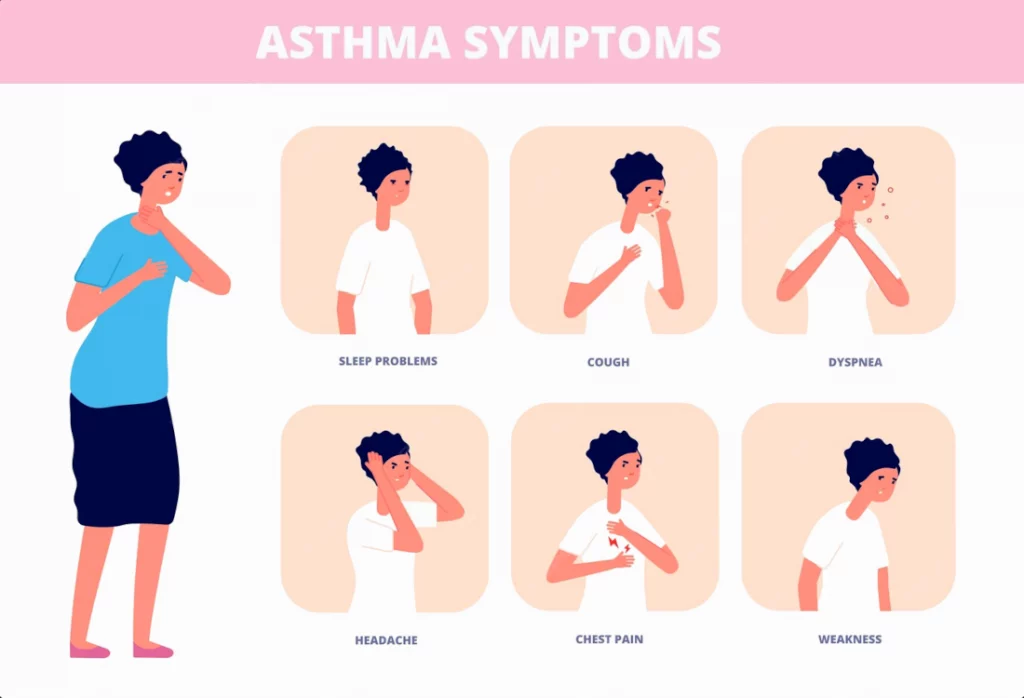
Other symptoms should give cause to suspect asthma:
- Chronic cough, either dry or initially dry, then oily, with a clear nocturnal predominance in the second half of the night. It is often triggered by laughter, excitement, irritation, exertion, cold, and contact with allergens. Coughing is a symptom that is perceived by the asthmatic, but auscultation reveals wheezing sounds that clearly indicate asthma. It is resistant to conventional fluidizing and sedative procedures as well as repeated courses of antibiotics.
- Chronic coughing in children is very often synonymous with asthma.
- Recurrent bronchitis, especially in children, often masks asthma. Recurrent episodes, the absence of fever, sputum, or purulent nasal discharge suggest asthma. A family history, improvement of the condition with treatment with bronchodilators or cortisone, and the presence of wheezing again suggest asthma.
- Shortness of breath and coughing during exertion. This type of symptom is very common in asthmatics. It is observed in about 75% of asthmatic children. Sometimes this is the only symptom of asthma, and it should be looked for in athletes who come to the doctor with shortness of breath during sports. The attack is moderate rather than severe, with coughing fits occurring within a few minutes of stopping intense physical activity, such as running.
- In infants, doctors diagnose asthma when three episodes of shortness of breath with wheezing occur before the age of three. Undoubtedly, it is at this age that the delay in diagnosis is most apparent. The episodes are preceded by an infection of the ENT organs, leading to a rather dry, quintous, recurrent cough, polypnea, and breathing sounds. Auscultation reveals wheezing and other so-called crackling breathing sounds.